

Diginovahub:From Click TO Real Growth
What is Search Engine Optimaization?
Definition: Search Engine Optimization (SEO) refers to the tactics used to optimize a website hence improving its ranking on search engines like Google and Bing. It is a cost-effective technique that every business should employ because it targets customers searching online using specific questions or names of products. SEO involves the use of keywords, fast page loading speed, and content that satisfies a customer’s search intent. Consequently, SEO increases the traffic of potential customers to a business’s website by enhancing its discoverability and credibility.
How Does Search Engine Optimization Work?
Search engines are eager to return the most relevant, quick, and precise results for queries. SEO stands for Search Engine Optimization. This process is about optimizing the website and making sure that Google knows the value of the company’s page and can recommend it to the users when they are searching for a specific topic.
There are three sequential steps in the algorithm: crawling, indexing, and ranking. First, search engines need to find the website. Bots are constantly analyzing the data, reading, and following the links on the web to find new pages and sites.
They must locate the URLs and save their content in the Biggest Library in the World. Second, the search engines should sort and classify the information. The last step is for the search algorithm to be able to return the most appropriate and relevant web page. The search engine will look in the Biggest Library in the World for the most fitting results and place them in order in accordance with the request.
Diffrent Sides Of SEO That Grow Your Buisness


On Page SEO
Off Page SEO
Technical SEO
What Is On_Page SEO?
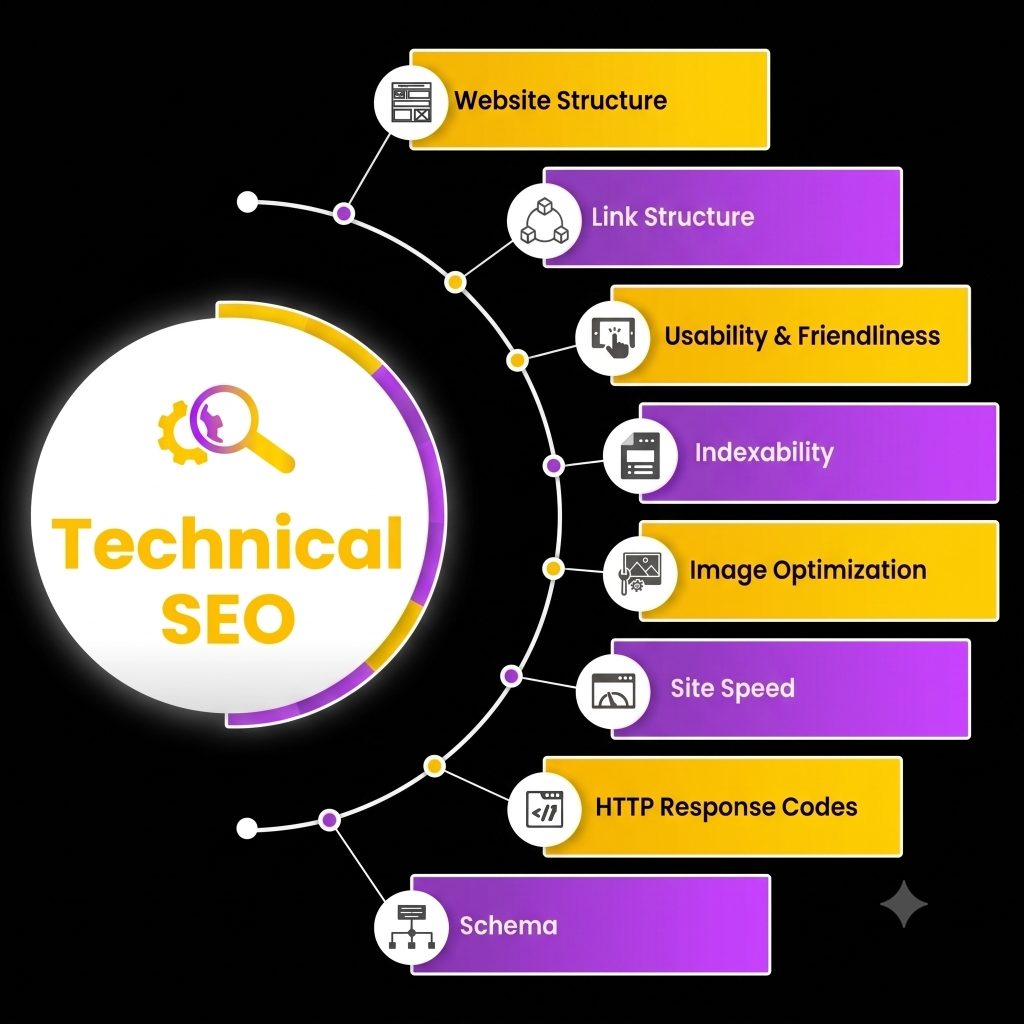
On-Page SEO means optimizing elements on your website so Google can read and understand your website content and show it in search results. It is a type of SEO involving written content creation, organizing written material, title creation, and optimization of images and links. Basically, it is about making your site easy to read by users and understandable by search engines.
Moreover, it is about forming clickable snippets in the search results so that users can see the most relevant article among others. By optimizing the size and format of the images on the page, you can make the page load faster on mobile devices so users would not leave the site because of its slowness. And last but not least, by linking related articles on your site together, you can make it easier for users to surf through your domain and get more traffic.
When a webpage is easy to read, loads quickly, and functions well on mobile devices, visitors are more likely to remain on the page and engage with the content.
Search engines recognize these positive user interactions and view the page as more valuable.
How On Page_SEO Helps Your Website Grow
On-page SEO enables search engines such as Google to comprehend the nature of your website and consequently, show your web pages in the search results when appropriate queries are entered by users. By optimizing the elements on your web pages including headings, title, body of text, and images, you make it easier for search engines to identify your web pages with specific topics.By using search terms customers are looking for on your website, it causes your site to rank higher in organic (free) search results and therefore allows you to reach a larger audience who are interested in your product/service.
Apart from boosting the search engine results, on-page SEO will improve the quality of your website for the visitors. It can make your content highly organized by using attractive headings, make your site load faster, and optimize texts to be easily readable on mobile phones.When visitors come and get value, relevant and well-organized information without frustration, they will stay, trust you more often, and be more likely to purchase and return. And the quality traffic you will get on a regular basis will make you popular over a long period of time. This will give your website authority and allow you to start making money.
What Is Off_Page SEO?
Unlike on-page SEO, which refers to optimization and changes that can be made directly on your web page, off-page SEO encompasses everything else that impacts your rankings in the search results. The most prominent off-page SEO element is a backlink, meaning a link from another site that recommends and vouches for your page in the eyes of Google. Backlinks are a critical component of SEO and a valuable source of traffic for your website.
The value of a backlink depends on the resources of the website that provides it, with links from high-traffic publications being the most desirable. However, any citation of your brand in the online space contributes to your SEO success, from social media posts to blog comments and brand mentions. Therefore, an expanded off-page SEO strategy helps to boost the rankings of your desired pages by increasing their perceived trustworthiness and popularity in the eyes of search engines, consequently attracting more traffic.
How Can Off_Page SEO Build Website Authority?

The Concept of Off-Page SEO: Building Authority by Demonstrating Popularity Among the Internet Community
The concept of Off-page SEO refers to optimizing the website in order to build its authority by demonstrating to search engines like Google that it is popular and well-regarded among the internet community. In other words, search engines ask the broader internet community to vote for the best resources on a particular topic. The websites that get backlinked by popular and high-quality web sources signal to Google that they can be trusted and are authoritative in a specific field. This increases their domain authority and significantly impacts the search engine rankings.
Apart from backlinks, the concept also includes mentions of the brand’s name, social media activity, and reviews. All these activities increase the website’s popularity and authority in the eyes of Google because they represent the opinions of the online community. Therefore, when the brand gets featured in reputable resources, mentioned on social media, or reviewed on a Q&A forum, Google understands that it has a good reputation and authority among the customers. As a result, the company’s website climbs in the search results and becomes more visible to the target audience.
What Is Technical SEO?
Technical SEO is optimizing the back-end of your site so that search engines could easily crawl, read, and store information about your web pages. Using analogies, it is like the internal machinery of the house. While on-page SEO is decoration, and off-page SEO is the neighborhood, technical SEO is a foundation, plumbing, and electricity. Your house could have stunning decor, but if the wires are not properly insulated, nobody would want to visit you.
Technical SEO could secure a steady flow of traffic by focusing on speed, mobile-friendliness, HTTPS encryption, broken links, and sitemaps. Moreover, it could help in eliminating errors so that Google’s crawlers would not have a hard time researching and archiving your data. A properly functioning technical SEO infrastructure makes websites visitor-friendly and easy to access for both users and search engine robots.
Key Elements Of Technical SEO
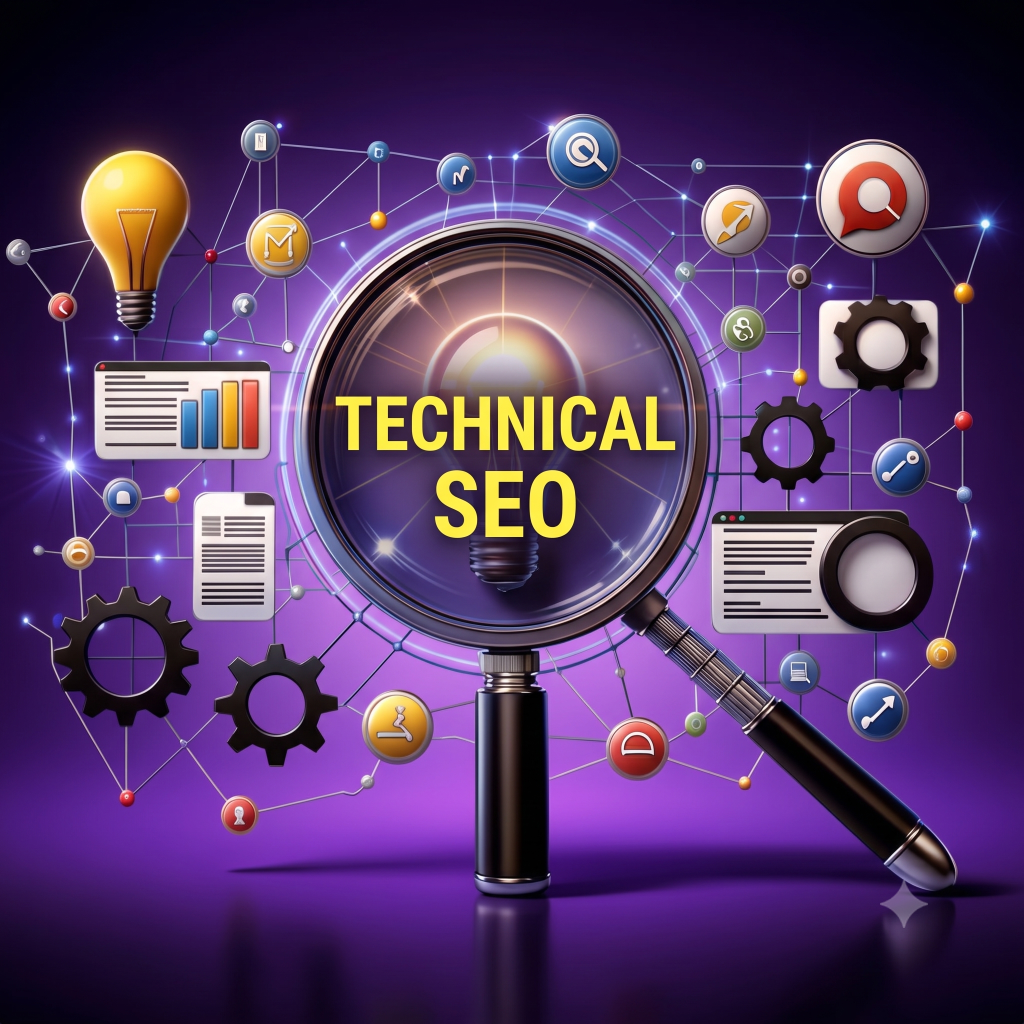
Technical SEO involves several important aspects that help a website perform better in search engines such as Google.One of the main factors is website speed, as sites that load quickly offer a better user experience and are more likely to rank higher.Another important consideration is mobile-friendliness, ensuring the website functions properly on all devices, particularly smartphones.
Crawlability and indexing are essential because search engines need to access and understand your site content.
Structured data, also known as schema markup, helps search engines display your content in more informative and visually appealing search results.
Together, these elements form a solid technical foundation that enhances overall SEO performance.
Website Speed: Fast-loading pages (under 3 seconds) reduce bounce rates and boost rankings.
Techniques Of SEO
Black Hat SEO
White Hat SEO
White Hat SEO



Black Hat SEO
Blackhat SEO is a type of search engine optimization that uses unethical and manipulative methods to quickly rank websites.Black Hat SEO denotes a group of unscrupulous techniques that spammers use to improve a website’s ranking in the search engine results pages (SERPs). Unlike the ethical and legitimate methods, black hat always strives to trick Google and other search engines. Spammers employ various tactics such as keyword stuffing, cloaking, reciprocal linking, and invisible text among other things.
Though black hat SEO techniques could be effective in improving a website’s ranking on the SERPs, they should be avoided by businesses. Some search engines have been noted to update their algorithms automatically thus detecting and penalizing the spam activities. As a result, the websites that employ these tactics risk being dropped from the search engine results pages or face manual penalties. In summary, black hat SEOs are detrimental to a business’s online presence. The techniques are aimed at short-term gains and offer no sustainable value to the websites that employ them.

White Hat SEO
White Hat SEO refers to the ethical use of Search Engine Optimization (SEO) practices to improve the rankings of a website on search engines. White hat SEO practitioners employ honest tactics that are not only search engine friendly but also satisfy real users’ demands.
While implementing white hat SEO strategies, one focuses on providing high-quality content, increasing websites’ stability and performance, ensuring mobile-friendliness, and getting backlinks from high authority. As a result, a website is guaranteed constant traffic growth with long tail and a better reputation among users since all SEO practices are legit and follow search engine guidelines.
White-hat SEO may take a relatively long time to show improvement in the search ranking of a website, but the results are durable and dependable. White-hat SEO enhances brand building, trust, authority, and long-term improvement of the website which eventually improves its search ranking for a longer period of time.Another key aspect is the development of backlinks from credible and trustworthy websites.In short, white hat SEO is the correct and secure approach to increasing a website’s visibility on search engines while preserving its quality and credibility.
Grey Hat SEO
Grey Hat SEO is the optimization strategy that lies between the White Hat and Black Hat approaches. Compared to the unethical Black Hat techniques, Grey Hat SEO practices are not explicitly condemned in Google guidelines but still tend to manipulate the system. Website owners often resort to such tactics to boost the page rankings by illegitimate ways but still not violate the terms of service. Traders usually buy expired domains, engage in link trading, use content spinning and private blog networks to take advantage of the loopholes. Since such methods are not completely banned by search engines, they are often used to take a short-term rankings gain before Google patches the vulnerability. Grey Hat SEO is usually a risky endeavor because the constantly evolving algorithm updates tend to penalize websites that use such tactics. The link networks and expired domain purchases are considered spam, thus applying such methods means risking a site’s visibility on Google. In most cases, the manipulations do not result in a site ban but rather a temporary penalty depending on the severity of the violation. Grey Hat SEO is generally more dangerous than the safe but slow White Hat methods. The manipulative tactics are usually designed to surpass the competitors using unscrupulous means. Since the unethical strategies are not explicitly banned, one should have a thorough understanding of the intricacies of search engine positioning to avoid severe penalties. Essentially, Grey Hat optimizers use manipulative tactics to gain ground on the search engine results pages. As such, SEOers who want to avoid any risks associated with unethical tactics are better off with the White Hat approach that keeps their site safe from algorithm updates.

SEO Approaches Comparison

Find Out Answers Here
Frequently Asked Questions
SEO stands for Search Engine Optimisation. It helps your website rank higher on search engines like Google and makes it easier for potential customers to find your business.
SEO increases your website’s visibility, brings more relevant visitors, and can help generate more leads and customers through organic search.
Yes. A good SEO strategy can improve search rankings and help attract more relevant visitors to your website.
Backlinks are links from other websites pointing to your website. High-quality and relevant backlinks can help improve your website’s authority.
Keywords are words or phrases people type into search engines. Using relevant keywords helps search engines understand what your web pages are about.


At Diginovahub, we have experience in helping businesses grow through smart digital marketing strategies.Our aim is to build your online presence and support long-term growth.
Important Links
Customer Spotlight
Customer Service
Marketing
FAQ
Contact
fatimasidra38710@gmail.com
9305190594
Civil Lines Prayagraj