Digital Maeketing

Digital Maeketing

AI-Powered Email Personalization: A Complete Guide

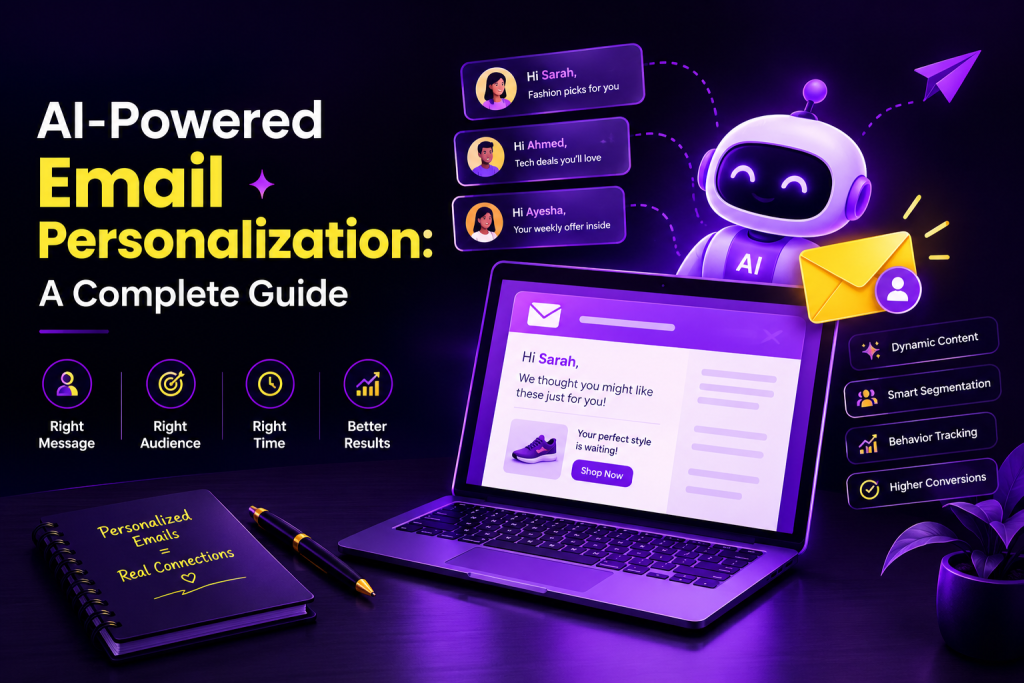
AI-Powered Email Personalization: A Complete Guide E-mail marketing is one of the most effective ways for businesses to engage with their customers, market products and develop long-lasting relationships. However, sending the same e-mails to all your subscribers may not always provide the best results. Each customer has different interests, needs and buying behaviours. AI Email Personalization can help businesses to create a more relevant e-mail experience for their customers by using AI. This means analysing customer data, identifying their preferences and suggesting the right content. Using AI businesses can personalise their subject line, product suggestions, content and send time. In this guide we’ll explain what AI email personalization is, how it works, the benefits, examples and best practices so you can improve your e-mail marketing performance. What Is AI-Powered Email Personalization? AI-driven personalisation is using AI to tailor your email marketing. Personalising emails traditionally will include putting the customer’s name into the subject line and/or greeting. With AI, you can analyse the data you are allowed to use about your customers such as their browsing behaviour, purchase history, preferences and past email engagement. An example would be an online clothing store recommending products based on their past purchases or favourite styles. AI can also help marketers create variations of emails, identify customer segments and even predict what content may be most relevant. Overall, the objective is to provide the right message to the right person at the right time. How Does AI-Powered Email Personalization Work? Email personalization using AI takes customer data, machine learning and marketing automation to make your emails more relevant. H3: 1. Gathering Customer Data This is done by gathering the right data such as a customers preference for emails, buying history, website data and previous interactions. This should be done in a transparent way and following any privacy regulations. H3: 2. Understanding Customers Preferences Using AI to analyse the data you have available you can identify what types of customers you have. This could include frequent visitors to sportswear items or people who purchase skincare products. H3: 3. Personalize Content Using the patterns you can identify, AI tools will provide suggestions for email subjects, recommendations, offers and content. H3: 4. Send at Right Times Some email marketing tools use AI to predict the best time to send emails to your subscribers. This can help you test out different times. H3: 5. Analyze and Improve AI tools can help you analyze open rates, click through rates, conversions and unsubscribes. You can use this information to improve your future campaigns. Benefits of AI-Powered Email Personalization 1. Improves engagement Personalised emails are more likely to gain attention. Personalised subject lines with helpful information can help increase engagement. H3: 2. Higher Conversion Rates By offering customers personalized product recommendations and offers they are more likely to convert depending on how good the recommendations, audience and offer. H3: 3. Time Saving AI can help marketers create personalised emails, suggested subject lines, segment customers and automate tedious tasks. This means you can spend more time on strategising. H3: 4. Personalised Recommendations E-commerce businesses can use AI to recommend products based on customers previous purchases, behaviour and/or similar customer preferences. This can help customers find products. H3: 5. Data Insights Using AI powered analytics can help businesses see what messages are working and what improvements are needed. This will help you make better decisions with your marketing. H2: Best ways to use AI for personalization AI powered email personalization can be used throughout different stages. Personalized Subject Lines AI tools can suggest subject lines based on the email topic, audience segment, and previous campaign performance. For example, instead of sending a general subject line such as “Check Out Our New Collection,” a clothing store might use “Discover New Styles for Your Everyday Look.” The message should remain honest and relevant rather than using misleading clickbait. H3: 2. Welcome Emails When someone subscribes to a newsletter, an automated welcome email can introduce the business, explain what the subscriber can expect, and recommend relevant content. AI can help adapt the message to the subscriber’s selected interests. H3: 3. Abandoned Cart Emails Online stores can send reminders to customers who add products to their carts but do not complete their purchases. AI can help personalize the reminder with relevant product details or recommendations. Businesses should use appropriate consent and frequency limits. H3: 4. Personalized Offers and Recommendations AI can help identify relevant products, services, or promotions for different customer groups. For example, a customer who regularly purchases running shoes might receive information about running accessories. H3: 5. Re-Engagement Campaigns Businesses can use AI to identify subscribers who have stopped interacting with emails and prepare suitable re-engagement campaigns. These campaigns may include helpful updates, new product information, or an invitation to update email preferences. Best AI Tools for Email Personalization Several marketing platforms provide AI-assisted features for email creation, automation, segmentation, and performance analysis. Mailchimp: Offers email marketing automation and AI-assisted marketing features. HubSpot: Supports marketing automation, customer segmentation, and AI-assisted content creation. Klaviyo: Provides email personalization and automation features, particularly for e-commerce businesses. Brevo: Offers email campaigns, automation workflows, and customer management features. ActiveCampaign: Provides marketing automation, segmentation, and personalized customer journeys. Features and pricing vary by plan and may change over time. Choose a tool based on your business size, budget, integrations, and personalization nee Best Practices for AI-Powered Email Personalization To ensure you get the best possible results when using AI, you should: Ensure the data is accurate. Segment your audience so they can be grouped by their interests, preferences or purchasing habits. Create valuable content. A/B test your content, including subject lines, CTAs and content. Follow data protection laws to ensure you are respecting user privacy. Ensure you respect opt-ins and unsubscribes. Track key metrics including conversions, clicks and unsubscribes. Ensure you have a manual process in place to check the accuracy, tone of voice and brand of your AI content. Personalisation should always be used to enhance the customers experience. You
Digital Maeketing

AI Agents in Digital Marketing: The Future of Business Automation

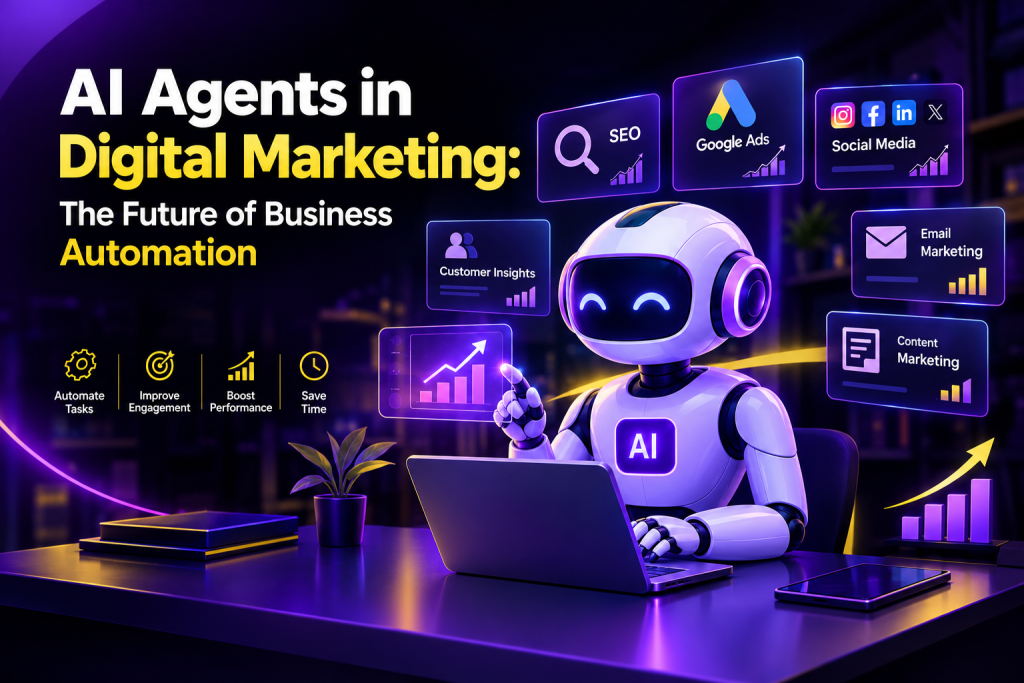
AI Agents in Digital Marketing: The Future of Business Automation Artificial Intelligence is transforming the marketing functions within businesses. With AI tools businesses can save time, become more efficient and make smarter decisions through using AI tools when creating marketing content. One of the latest trends within AI is using AI agents. Unlike traditional automation tools, AI agents have the ability to understand objectives, analyse information, plan and perform specific tasks with minimal human input. Depending on how they’re created, they can be used with integrated tools and adapt their methods depending on what the outcome is. Many businesses are now looking into using AI agents to help improve customer service, manage their marketing campaigns, create insights and reduce repetitive tasks. Within this blog we’ll look at what AI agents are, how they work, the benefits they provide and how they can be used. We’ll also look at why they may become an important aspect of business automation in the future. What Are AI Agents in Digital Marketing? AI agents are intelligent software designed to achieve certain objectives. They are capable of gathering information, understanding tasks, making decisions and carrying out actions. Within digital marketing, AI agents can be used for keyword research, monitoring campaigns, qualifying leads, communicating with customers and providing reports. An example of an AI marketing agent would be an agent that looks at traffic on your website and identifies which pages are losing traffic. It will then suggest ways to improve the page and create a report for the marketing team. However, an AI agent will not do everything for you perfectly. The capabilities of an agent are dependant on the model underneath, the data it has access to, tools it can access, permissions and human supervision. How Are AI Agents Different From Traditional Automation? Traditional automation processes usually happen based on set rules. An example would be sending a welcome email through an email automation system when a customer subscribes to your newsletter. An AI agent will look at a customers history and find the relevant information to recommend what the best step is for them to take, within allowed guidelines. The key point here is that traditional automation is using set processes whilst AI agents can make decisions based on the context. How do AI agents work in digital marketing? AI agents usually follow a process. Understanding the Objective The agent will understand a goal, such as better quality leads, finding content opportunities or tracking how advertising is performing. Gathering & Analysing Data The agent will look at relevant data from approved sources, such as campaign reports, website analytics, customer interactions or keyword tools. Planning the Next Step The agent will decide what steps can be taken to reach the goal. This could be suggesting new keywords, content ideas or identifying poor performing ads. Taking Action & Assessing If there are tools available and permission given the agent can carry out approved tasks. They can look at the results and make suggestions on how to improve further. It is important to have humans involved in any actions made, especially if they are affecting advertising spend, customer data, content that will be made public or important business decisions. Top uses of AI agents in digital marketing AI agents can help with a variety of marketing tasks. Whether they are useful depends on your business and what you need. AI Agents for SEO SEO includes keyword research, content optimisation and analysis, plus tracking. AI agents can help with identifying keyword opportunities, analysing pages on your website, identifying gaps and creating reports. An agent may analyse a range of blog posts and recommend pages to update or improve their internal linking. AI recommendation must be checked for accuracy, relevancy and that they comply with search engines. H3: 2. Content Marketing Creating valuable content can be a time-consuming process. Using AI agents can help with researching topics, creating content calendars, outlining articles and analysing how well content is performing. They can help turn your blog post into other content types including social media captions, email summaries and short video scripts. The final content should be edited by a human to ensure it remains unique, accurate, fits your brand and is useful to your audience. H3: 3. Google Ads AI agents can help marketers analyse campaigns, identify changes in performance, group keywords and recommend changes to budgets. An agent may highlight that a campaign is performing poorly with increasing costs. The marketer can investigate and decide what changes to make. Any changes to your campaigns should have clear budget limits, approvals and performance measures in place. H3: 4. Social Media Marketing Social media marketing can be time consuming, requiring regular posting, engaging with your audience, keeping up to date with trends and analysing performance. AI agents can help you come up with ideas, create posting schedules, sort comments into categories and create draft responses to common questions. This will reduce any repetitive tasks and allow your marketing team to get creative. H3: 5. Lead Generation and Email Marketing AI agents can help you identify potential leads, organise enquiries and prioritise them using approved customer details. They can help with segmenting your audience, suggesting personalised content and analysing campaign performance. For example you could use an AI agent to sort your incoming enquiries into categories based on services they’re interested in and create appropriate follow-up messages to review. You should always abide by any relevant privacy laws and ensure you have the necessary permissions. Don’t send any misleading or unwanted communications. Benefits of AI Agents for Businesses Strategic use of AI agents can provide many benefits. H3: 1. Save Time + Improve Productivity By completing repetitive tasks such as data gathering, report organisation, and draft creation, AI agents free up more time for your marketing team to spend on strategy, creative and engagement. H3: 2. Enables Quick Decision Making With huge amounts of data being analysed by AI agents, it enables faster identification of patterns and opportunities for marketers

Digital Maeketing

AI Marketing Automation

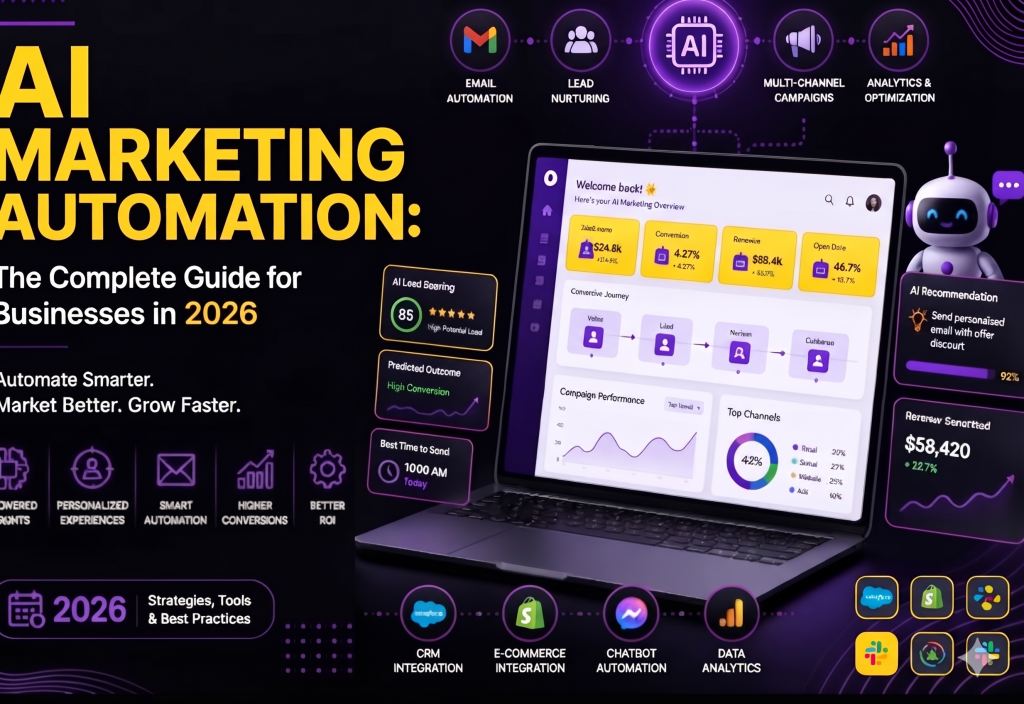
AI Marketing Automation: How to Grow Your Business Smarter in 2026 Marketing is transforming as more companies are using Artificial Intelligence (AI) to better understand their customers, create content, run campaigns and improve performance. Many time-consuming tasks can be supported by automation tools and AI. AI marketing automation is a strategy which uses artificial intelligence and automation to help businesses better communicate with their customers. This can include automatically sending welcome emails to new subscribers, suggesting products based on a customer’s interests or using AI tools to see which campaigns are working well. Not only does it save businesses time, but it can help them provide customers with more accurate communications, meet their needs and make data-driven decisions. In this guide, we’ll cover what AI marketing automation is, how it works, the benefits of using it, common tools and practical strategies to help your business grow in 2026. What Is AI Marketing Automation? AI marketing automation uses artificial intelligence and automation tools to plan, organise, personalise and improve your marketing efforts. Traditional marketing automation will use set rules. For example, when a new subscriber signs up to your newsletter, they’ll automatically receive a welcome email. AI marketing automation can take this a step further by using the data available to identify patterns and predict what topics your customers are likely to be interested in, making it easier for you to personalise your communication with them. These can be used for email marketing, social media management, generating leads, segmenting customers, optimising advertising and providing customer support. For example, if you run an online clothing store, when customers visit your website and look at a specific category you may want to use your marketing system to suggest related items or send them relevant messages (assuming they’ve given their permission). This means you can provide more relevant communication. How Does AI Marketing Automation Work? AI Marketing Automation uses customer data, automation and AI to aid marketing. H3: 1. Customer Data Marketing can gather data from web visits, emails, purchases and customer forms (and other linked data) depending on privacy regulations. This gives insight into customer behaviour and interests. H3: 2. Customer Behaviour Analysis Using AI tools you can analyse the data you have to look for trends. This will help to segment customers with similar interests. It can also help predict what products or messages might be relevant to your audience. This isn’t always 100% accurate so it is a good idea to keep an eye on results and not assume anything about individual customers. H3: 3. Automation Workflows You can create workflows to complete certain tasks. For example, sending a welcome email once someone has subscribed or notifying sales when a qualified lead completes an enquiry form. H3: 4. Targeted Marketing AI can help personalise your subject line of emails, recommend products, suggest content and advertise. This should be helpful to your customers and should be respectful. H3: 5. Reviewing Performance Marketing platforms can help you review how well your campaigns are doing. This can give insight into how many clicks, conversions, engagement and revenue you’re getting. From this information marketers can improve their workflows, try out new messages and make better decisions. Benefits of AI Marketing Automation There are many benefits of using AI marketing automation. H3: Saves Time Marketing teams can often waste a lot of their valuable time by doing manual processes like setting up email campaigns, lead management, reports and other repetitive tasks. With automation many of these can be done for you. Employees will have more time for strategic thinking, creativity and focusing on the customer experience. For example a business can set up an automated email drip campaign. H3: Better Personalisation Customers will engage with your messages more if they feel it is relevant to them. With AI you can personalise recommendations for your customers based on what you know about them. This can create a much more useful communication. H3: Lead Generation and Nurturing An AI system can help you identify high quality leads, organise customer data and know who to prioritise for follow up. For example, a digital marketing agency can capture new enquires automatically, allocate to a sales rep and send relevant information to potential customers. Care should be taken to ensure you are not overlooking useful leads due to lead scoring. H3: Better Decision Making Using AI tools will help you analyse the data from your campaigns and identify patterns. This will help you understand which channels, messages and audiences to focus on for further experimentation. However, you should always ensure that the recommendations from the AI are not taken at face value and are instead analysed against the business outcomes. Enables More Consistent Customer Communication Automated workflows can allow you to send messages at the right time in the customer journey. This could be an email welcoming them to your business, reminder emails for appointments, abandoned cart messages and post purchase follow-ups. By keeping communication consistent it can create a better customer experience. H3: 6. Helps businesses scale their marketing As a business grows you will have more customers and more campaigns to manage. AI marketing automation can help you manage increased volumes of communication without having to increase every part of your marketing manually. However workflows will still need to be monitored and maintained. Types of AI Marketing Automation Email Marketing Automation Email marketing automation sends messages based on customer actions, preferences, or predefined schedules. AI can assist with audience segmentation, subject-line suggestions, and campaign analysis. Examples: Welcome emails Product recommendations Follow-up emails Customer re-engagement campaigns Post-purchase messages Social Media Marketing Automation Social media can be used to help plan out your social media posts, and track engagement, comments and insights. AI can help you generate ideas, write captions and analyse what’s trending. Your posts will still need to be checked by a human to make sure they are in line with your brand style and the information is correct. H3: 3. Advertising Using AI within your advertising platforms

Digital Maeketing

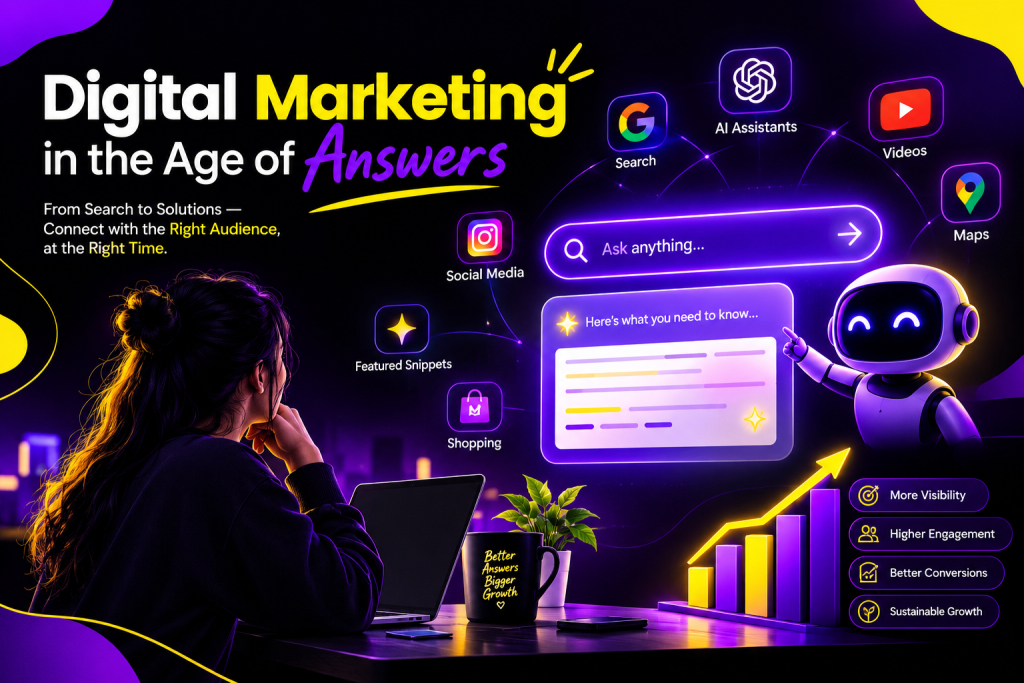
Digital Marketing in the Age of Answers

Digital Marketing in the Age of Answers The way in which people search for information on the web is rapidly evolving. There is a growing trend in which searchers ask natural language questions that are answered directly by AI search tools instead of having to sift through a list of results to find relevant resources. This phenomenon is what we refer to as the Age of Answers. What this means for marketers is that optimizing your website so that it shows up higher on the search engine results page is no longer enough. You must be able to provide search engines and customers with information that is easily understood and acted upon. From SEO and content marketing to social media and AI optimization, discover all the ways in which digital marketers need to adapt in this era of answers. In this blog, we will discuss the impact of the age of answers on digital marketing. What Is the Age of Answers? The Age of Answers describes a search environment where users increasingly expect direct, useful answers to their questions. Traditional search usually works like this: User searches → Search engine shows links → User visits websites → User finds an answer AI-powered search can change the experience: User asks a question → AI understands the query → AI generates or summarizes an answer → User may explore supporting sources This does not mean traditional search has disappeared. Instead, search is becoming more conversational, contextual, and answer-focused. For businesses, the important question is no longer just: “How do I rank on Google?” It is also: “How can my brand become a trusted source for answers?”   How AI Is Changing Digital Marketing Artificial intelligence is set to revolutionize every element of digital marketing. From analyzing information to studying the audience, generating content ideas, automating repetitive tasks, personalizing the experience and recognizing patterns, AI can help marketers in so many ways. Search is also moving towards more conversational interfaces where users are asking questions rather than just typing in a few words. Instead of searching for something like: “best digital marketing agency” users could ask the following question: “What should a small business look for when choosing a digital marketing agency?” This means that there are exciting opportunities for companies that can produce high quality, comprehensive and trustworthy content. From Keywords to Questions Traditional SEO often focuses heavily on keywords. Keywords remain important, but marketers should also understand the questions and problems behind those searches. Instead of creating content only around a keyword, businesses should answer: What is the user trying to understand? What problem are they trying to solve? What follow-up questions might they have? What information would help them make a decision? This approach can make content more useful for both people and modern search systems. Why SEO Still Matters in the Age of Answers The rise of AI does not make SEO irrelevant. Because SEO helps search engines to find, understand and evaluate the content of a web page. Moreover, proper SEO practices allow you to shape the desired perception among customers. The main directions of SEO are: Helpful and relevant content Search intent Clear website structure Internal linking Descriptive titles and headings Technical SEO Mobile-friendly design Page experience Accurate and updated information Relevant authority and references The difference is that SEO is becoming broader. Businesses need to think beyond traditional rankings and consider how their information may be discovered across different search experiences. The Rise of Answer Engine Optimization Answer Engine Optimization (AEO) focuses on making content easier for systems that provide direct answers to user questions. The goal is not simply to rank for a keyword. It is to provide information that clearly answers a user’s question. H3: How to Optimize Content for Answers Businesses can improve answer-focused content by: Answering questions directlyGive a clear answer before adding deeper explanations. Using descriptive headingsOrganize content around meaningful questions and topics. Adding useful examplesExamples make complex concepts easier to understand. Using structured informationLists, tables, steps, and clearly organized sections can improve readability. Building topical depthCover the main topic and closely related questions comprehensively. Keeping information accurateReview and update content when facts, products, or industry practices change.   Content Marketing in the Age of Answers Content marketing is shifting its focus toward helpfulness and expertise. Publishing vast amounts of generic content is no longer sufficient in and of itself. Firms must create content that actually helps people and instills confidence in their brands. Useful forms of content include: How-to guides Detailed blog posts FAQs Case studies Comparison articles Original research Tutorials Expert insights Checklists Industry reports For example, instead of writing a general article titled “What Is SEO?”, a business could create a comprehensive guide explaining how SEO works, common mistakes, practical examples, and frequently asked questions. Create Content That Deserves to Be Cited In an answer-focused search environment, businesses should strive to create informative, helpful, credible and well-researched content, wherever appropriate. Original insights, first-hand research and expert opinions, along with examples and credible references, will help businesses create the most value from their content. The basic idea is simple: Don’t create content for the sake of ranking, but rather create content worth finding. Brand Visibility Is Becoming More Important In traditional search, a user typically sees several sites (in search engine result pages) and then goes to a site. In an AI powered search experience, the user may see a summary of an answer that may include or credit multiple sources. This means brand presence and visibility matters even if a user isn’t clicking through to a site. Businesses need to work across channels to build their presence including: Websites Search engines Social media Business profiles Industry websites Review platforms Video platforms Online communities A strong and consistent digital presence can help people recognize and trust a brand across different discovery channels. H2: How Businesses Can Adapt to the Age of Answers Businesses do not need to completely abandon traditional marketing strategies. Instead, they should expand them. H3:

Digital Maeketing, Uncategorized

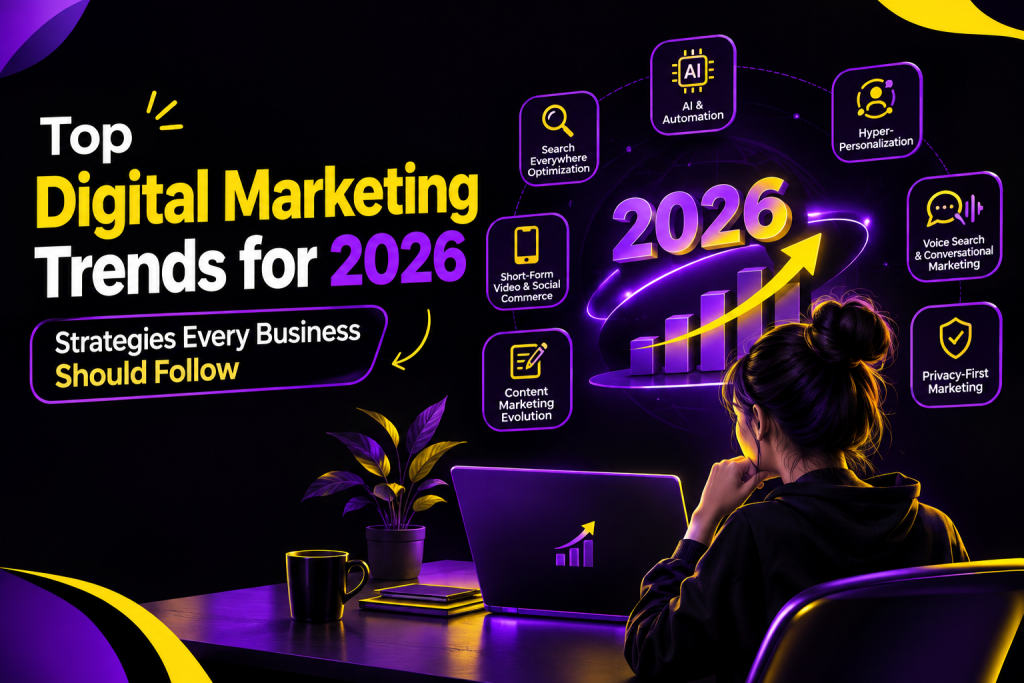
Top Digital Marketing Trends for 2026

Top Digital Marketing Trends for 2026: Strategies Every Business Should Follow Digital marketing trends in 2026 are evolving at an unprecedented rate as new technologies and consumer behaviors continue shaping the digital landscape. Organizations are now harnessing artificial intelligence and other emerging technologies to automate and personalize marketing activities. Moreover, modern customers are embracing multiple avenues to discover new products and services, including social media, video content, artificial intelligence, and interactive platforms. These developments are creating new opportunities that digital marketers can use to transform their strategies, engage customers, boost sales, and achieve other marketing objectives. Therefore, all business owners, including small-scale entrepreneurs, start-ups, and big corporations, need to identify and understand modern digital marketing trends. This blog contains vital information on the best digital marketing trends in 2026. The article highlights key issues and provides relevant background information on the topic. Moreover, the authors also give practical recommendations on how different businesses can use the trends to transform their marketing campaigns. Artificial Intelligence (AI) in Digital Marketing Artificial Intelligence has become a significant trend in modern digital marketing. Today, companies use AI to create content and analyze and track customer behavior. In particular, AI helps to optimize marketing performance, automate repetitive tasks, and obtain specific marketing insights that would take much longer to acquire without artificial intelligence. There are several ways to apply AI in digital marketing: Come up with ideas for blogs, analyze customer behavior, produce marketing reports, optimize advertising, automate repetitive tasks However, it is essential to note that AI-generated texts should be controlled by humans to ensure that they are accurate, error-free, and properly formatted. H2 2: AI-Powered Personalization Customers want relevant information and offers. AI-powered personalization allows you to give customers exactly what they want. For instance, if customers browse specific product categories on your website, you can suggest similar items or remind them of products that may be of interest to them. The same applies to email marketing, where you can send subscribers special offers based on their interests. AI-powered personalization helps to build relationships with customers and encourages them to return to your business. Thus, the advantages of using AI for personalization include: Relevancy, Higher customer engagement, Audience insights, Better marketing campaign performance. However, to achieve personalization, a company must have access to information about customers’ preferences and behavior. Therefore, it is critical to collect and use this data carefully to ensure security and privacy. H2 3: Search Everywhere Optimization Modern consumers use various channels to research and buy products and services. Therefore, it has become critical to optimize the presence in all platforms, not just Google. Optimization everywhere means that a company appears in the search results whenever a customer searches for a product or service on Google, YouTube, Instagram, marketplaces, and other platforms. In other words, an optimized website and social media accounts allow a customer to find a company at any stage of the purchasing process. For example, a customer may see an ad on Instagram, watch a YouTube review, and buy a product based on the information found on the company’s website. It is essential to implement the following optimization tips: Use keywords, optimize social media accounts, optimize YouTube, publish informative blog posts, ensure consistency of information, Therefore, Search Everywhere optimization is critical to attracting customers at different stages of the purchasing process. H2 4: Short-Form Video Marketing Short-form videos are a significant trend in social media in 2026. Thus, companies should use the popularity of Instagram Reels and YouTube Shorts to promote their goods and services. For example, businesses can post short videos to demonstrate how to use their products, provide useful tips, answer customers’ questions, show behind-the-scenes content, and much more. A clothing retailer can post styling videos, while a digital marketing agency can give marketing tips. Some ideas for short-form video marketing include: Educational content, Product reviews, Behind-the-scenes content, Answering customers’ questions. Therefore, when using short-form videos for marketing purposes, it is essential to focus on creating value for customers rather than increasing views. Voice Search and Conversational SEO Voice search is a new way for people to find information by talking instead of typing. Users are communicating with their phones, smart devices, and virtual assistants. Therefore, companies must optimize their content for voice search. For instance, instead of searching for “best digital marketing agency,” a buyer may ask for which digital marketing agency helps small businesses grow. How to optimize the content for conversational search: Make sure the frequently asked questions (FAQ) are well-organized. Use common language and answer the questions fully. Implement long-tail keywords. Remove barriers for mobile users. Moreover, the content that answers specific questions will perform better in the SERP (search engine results page) for traditional and conversational search. H2: 6. Marketing Automation Marketing automation is a technology that facilitates the marketer’s repetitive tasks. Simultaneously, it minimizes human errors. Instead of doing everything manually, professionals use programs that design, execute, and control marketing activities. Some samples of marketing automation are distributing newsletters, following up with customers, reminding buyers about abandoned purchases, and sending out marketing emails. For example, once a person subscribes to a blog, a marketer gets notified so that he can send a welcome email right away. It could include information about the company’s products and services. The benefits of marketing automation are as follows: Time and effort-saving. Helping establish effective communication with clients. Keeping track of leads. Managing and analyzing successful campaigns. Moreover, automating marketing tasks makes it easier for companies to engage with their customers without doing any time-consuming activities manually. However, it is essential that the marketers review the emails or messages periodically to make sure that everything is smooth, relevant, and personalized. Influencer and Creator Marketing Influencer and creator marketing can help companies to design effective promotional strategies. In 2026, businesses are looking to partner with creators who appeal to a certain type of customer and therefore serve as a useful channel for targeting specific audiences. For instance, a company selling cosmetics can benefit greatly

Digital Maeketing, Uncategorized

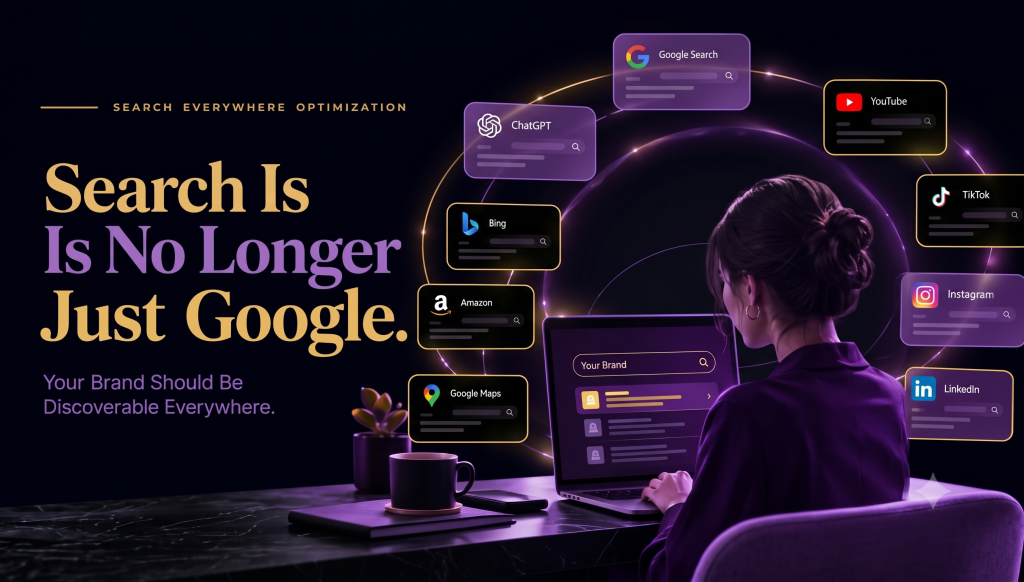
Search Everywhere Optimization: Why Your Brand Needs to Be Discoverable Everywhere

Search Everywhere Optimization: Why Your Brand Needs to Be Discoverable Everywhere Introduction   At present, there are a lot of ways to find what people are looking for — apart from using Google. Today, people use social media, YouTube, AI, online forums, and other sources to look for information, products, and services. So, this is a great opportunity for companies to be found in these places too. Search Everywhere Optimization is a new concept in digital marketing that helps companies appear in different search spaces, apart from Google. So it is beneficial for businesses to show up everywhere customers search for products or services like on social media, forums, etc. For example, a customer may find a clothing brand on Instagram, research products on YouTube, and shop on the company’s website. Hence, it is essential to help customers find companies like search everywhere. Now, in this blog, I will discuss what is search everywhere optimization and its importance. I will also provide some useful tips about this concept for your business. What Is Search Everywhere Optimization? Search everywhere optimization is the set of all measures aimed at increasing the visibility of a brand, content, products, and services in different search platforms. It includes search engines, social networks, video platforms, artificial intelligence, and marketplaces. Traditional SEO focuses on optimizing a website so that it appears in the search results of search engines. Search everywhere optimization also includes YouTube, Instagram, Pinterest, AI search, and other platforms. Each platform has its own optimization features, such as: Google — optimizing web pages and blog articles; Instagram — using keywords, hashtags, and compelling text in the description; YouTube — optimizing video files and descriptions; Pinterest — creating content and pins with keywords; AI search — developing content that will be understandable to artificial intelligence and helpful to the user. The common goal of optimizing search everywhere is to make the brand visible and easily found by users in all platforms. Why Does Your Brand Need Search Everywhere Optimization? Customers use different platforms at various stages of the buying process. Having your business found on just one channel can be limiting. Below, we highlight some key points as to why Search Everywhere Optimization is important. H3: 1. Target a Broader Audience Each digital space has its own audience that prefers discovering brands there. Some customers may search products on Google, but others may shop on social media sites like Instagram or TikTok, or watch videos on YouTube, or look out for products on digital marketplaces. Optimizing your content on these various digital spaces can help your brand reach out to a wider audience. H3: 2. Boost Brand Awareness The more customers encounter a business, the more familiar they become with it. Customers may stumble upon one of your articles on Google, see a post on your business’ social media account the next day, and watch one of your videos on YouTube a week later. H3: 3. Build Credibility with Customers Customers will always conduct research before purchasing a product or service. They research on portals such as your website, social media, through videos and demonstrations to understand a product or service better. Having a strong digital presence provides customers with the essential information they need about your business, boosting credibility and influencing their decisions. H3: 4. Drive More Traffic and Engagement Digital portals have varying traffic, which means that utilizing multiple digital spaces can boost your traffic and engagement. Google drives organic traffic, but social media can drive more engagement, while videos on YouTube or other portals can aid a customer in understanding your products and services. Customers can discover products and services through different digital portals, each of which offers something different to both the business and the customer. Key Platforms for Search Everywhere Optimization To ensure your brand’s discoverability in any platform, you must know where your target audience spends their time and what unique features each platform offers. H3: 1. Google and Other Search Engines Google is the most widely used search engine, which makes it highly important for any business. Companies can increase their discoverability on Google by creating high-quality content, using the right keywords, optimizing the website’s CTR (click-through rate), and ensuring the site’s speedy loading and easy navigation. While integrating keywords and links into the content, businesses should also create SEO-friendly URLs. Most importantly, the content created for search engines should be focused on answering questions and providing information, not on promoting the company.idders H3: 2. Social Media Networks Many people use social media networks to research brands, products, and services. Each network has its own rules and regulations about what kind of content can be posted there — so it’s essential that companies follow each network’s specific requirements when publishing any material there. Moreover, profiles on these platforms should also have keywords in their description, usernames, hashtags, etc. To increase one’s discoverability in social media means to post useful, high-quality content and actively engage with the audience. H3: 3. YouTube and Other Video Platforms Many people watch videos online to learn about products and services. A company can greatly benefit from uploading video content to a video platform because it can both entertain and inform the audience. It is critical to upload videos that will address customers’ questions and concerns. A video’s title, description, and subtitles should also contain keywords for better discoverability. Besides, companies can turn their blog posts into videos and upload them to a video platform to maximize reach. AI-Powered Search Platforms AI search tools are changing the game for those looking to do research online. From providing concise answers to a query, the new tools are able to summarize and recommend multiple resources. To be found by these search tools just remember to give concise, accurate, well-organized information that has been properly cited. Create interesting headers, answer questions, and back up your material with reliable evidence. Keep in mind that while you may not be recommended on an AI summary, good materials help to

Digital Maeketing, Uncategorized

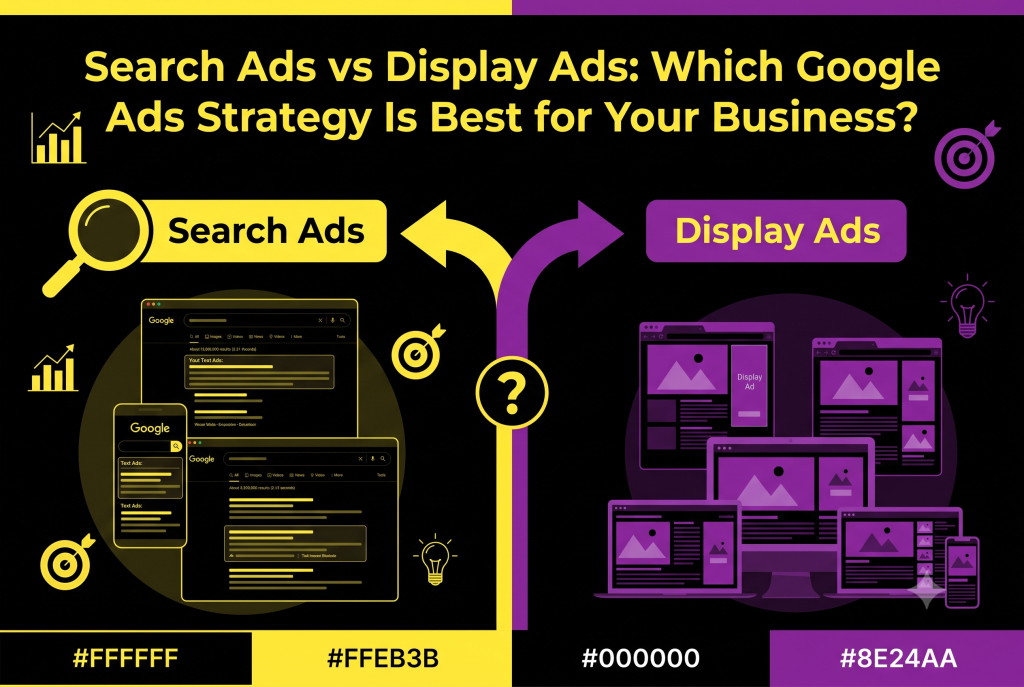
Search Ads vs Display Ads: Which Google Ads Strategy Is Best for Your Business?

Introduction Google offers multiple advertising options that allow companies to reach thousands of potential customers online, among which Search and Display ads are the most popular. Search Ads appear when users search for specific terms related to the proposed business, whereas Display Ads utilize graphical banners for advertising. Though both ad types attract clients and increase the overall visibility of the company, their difference is crucial in terms of distinct strategies and areas of usage, which allows businesses to achieve a better understanding of the two advertising types. What Are Google Search Ads? What Search Ads areWhere they appearHow keyword targeting worksHow intent plays into itAnd how it helps businesses find customers actively searching for products and services. Give me an example Example A person searches for “digital marketing agency near me” and relevant Search Ads may appear in the search results. What Are Google Display Ads? What Display Ads are Where they can appear Visual banners and image-based advertising Audience and contextual targeting Brand awareness Remarketing Benefits of Google Search Ads H3: Reach Customers With Active Search Intent Explain how Search Ads can reach customers searching for a product, service or solution H3: Useful for Leads and Conversions Explain why Search Ads are great for businesses looking to get enquiries, calls, bookings or sales H3: Leveraging Keywords Explain how keywords play a role in connecting businesses with customers H3: Measurable Insights Explain how businesses can see how many clicks, conversions and how much they are spending on their campaigns H2: Benefits of Google Display Ads Make sure to use H3 sections: H3: Build Brand Awareness Explain how Display Ads can help build brand awareness H3: Powerful Visuals Explain how strong visuals can help support your ad and convey your message quickly and effectively H3: Useful for Remarketing Explain how businesses can retarget customers who have interacted on their website (where applicable) H3: Reach Out To Customers Across the Web Explain how Display Ads can help businesses reach relevant audiences beyond search results Search Ads vs Display Ads: Which One Should You Choose? Choose Search Ads When Your Goal Is… Generate leads Get calls Drive enquiries Increase direct sales Reach users actively searching Promote high-intent services Choose Display Ads When Your Goal Is… Increase brand awareness Reach new audiences Promote visual products Support remarketing Build interest Keep your brand visible Can You Use Search Ads and Display Ads Together? Explain how both advertisements can work together as a part of one marketing strategy. Give a simple example of a customer journey: Display ads → Awareness → Website visit → Search ads → Conversion → Remarketing Explain how you could use different ad formats throughout different stages of the customer journey. How to Choose the Right Google Ads Strategy Start With Your Business Goal Describe why companies should establish whether they want to build awareness, drive traffic, get leads, make sales, get calls, or have some other goal. H3: Know Your Audience Ask such questions as: What are they searching for? Are these people aware of your brand? What stage of the decision-making process are they in? What type of content do they want to see? H3: Set a Budget Explain that a company should set the necessary budget for the campaign depending on the goals and expected results, instead of thinking that one advertising resource is better than others without proper analysis. H3: Test and Optimize Explain the importance of analyzing the results and optimizing the campaign. Simple Google Ads Strategy for Small Businesses Step 1: Set Business ObjectiveStep 2: Set Target AudienceStep 3: Pick Search Only or Display Only or BothStep 4: Write Ads CopyStep 5: Build Landing PagesStep 6: Setup Conversion TrackingStep 7: Track PerformanceStep 8: Refine Paid Search Activities Search Ads vs Display Ads: Final Takeaway Search Ads are all about capitalizing on existing searches.Meanwhile,Display Ads concentrate on visualsandengagementThey both have their roles within the larger Google Ads ecosystem, and the choice between them depends on the specific business needs and goals. Conclusion Search Ads and Display Ads are two distinct ad types that have their own strengths and weaknesses. Search Ads are the most suitable type of ads for the people who are looking for something specific and want to find it as soon as possible. Display Ads benefit business by building brand awareness, targeting new customers, and retargeting those who already showed interest. Depending on the company’s goals, budget, and other factors, it is possible to choose one particular type of ads or use them in combination with each other. Keeping track of campaign progress and making adjustments to the strategy on time will help benefit from Google Ads many times over. FAQ…… 1. What is the difference between Search Ads and Display Ads?The Search Ads are shown in response to specific search queries initiated by internet users and the Display Ads are visual-based ads that appear across various channels like the website, etc. 2. Are Search Ads better than Display Ads?It depends if both of them are being utilized for different purposes. Search Ads can appear in search results, which will target customers looking for specific products/services whereas Display Ads can be used for retargeting and brand awareness. So, it’s always better to utilise both of them wisely. 3. When should a business use Google Search Ads?A business should utilise Google Search Ads if they want to target customers searching for products/services similar to theirs and want to generate leads, enquiries, calls, bookings, and sales. 4. When should a business use Google Display Ads?A business should utilise Google Display Ads to create brand awareness, retargeting, promote visual products and services, and utilise remarketing. 5. Can Search Ads and Display Ads be used together?Yes, a business can utilise both the ads in their marketing strategy as they have different purposes. Display Ads can create brand awareness and Search Ads can target customers searching for similar products/services. Click here

Digital Maeketing, Uncategorized

THE FUTURE OF DIGITAL MARKETING AFTER AI

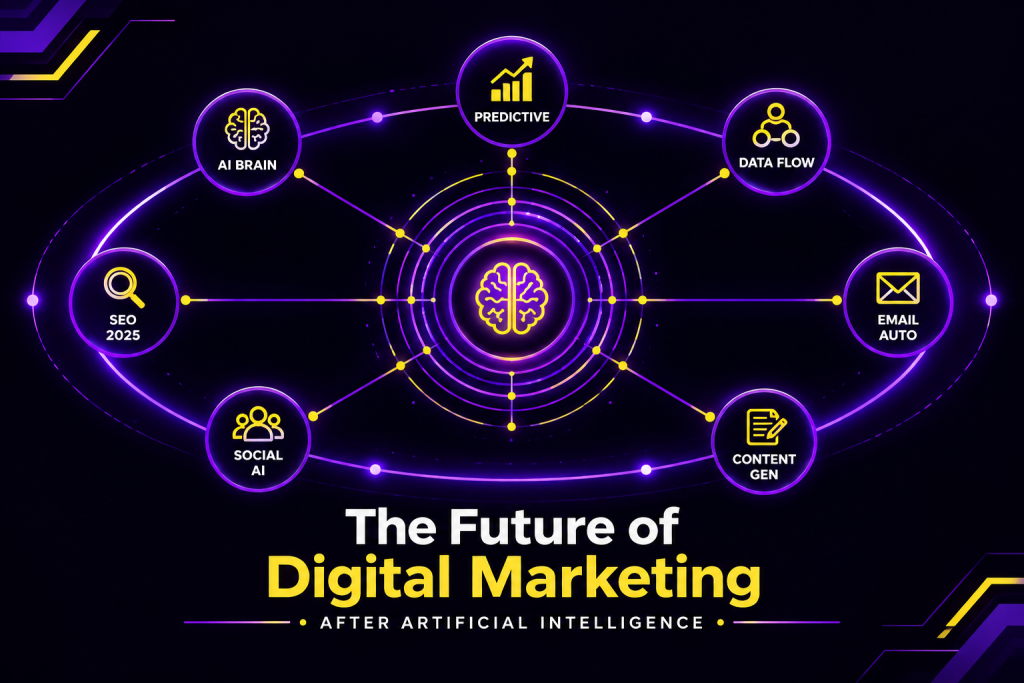
The Future Of Digital Marketing After AI Explain what digital marketing may look like as AI becomes more integrated into everyday marketing. Make sure to use relevant H3 sections. H3: AI-Powered Personalization Explain how can businesses provide more relevant content, offers, recommendations, and experiences to their customers using AI. H3: The Rise of AI Search Explain how will the rise of AI-powered search, as well as conversational search, change the game for marketing. Explain why businesses should start focusing more on: search intenthelpful and informative contentoriginal informationclear answers SEO-friendly contentconversational queriesand do notclaim that SEO will no longer matter H3: AI and Content MarketingExplain what ways will marketing teams use AI for content marketing, including but not limited to:content ideasresearchoutlinesdraftingcontent optimizationrepurposingpersonalizationExplain why human expertise, creativity, originality, fact-checking, and editing are still essential parts of content marketingH3: Smarter Marketing Automation Explain how can AI help with automating and managing repetitive marketing tasks, such as:email marketinglead nurturingcustomer segmentationanalysisreportingfollow-upsH3: AI-Powered AdvertisingExplain how can AI help with online advertising, including:audience targetingoptimizationad variationsbudget analysisad performance, insightspredictive optimizationDo not make unsubstantiated claims about what AI can do for marketingH3: AI and Customer ExperienceExplain how chatbots, virtual assistants, recommendation systems, and personalized communication will change the customer experience.Explain why human customer support still plays a vital role in addressing more complicated or delicate issues that require human empathy and support. Will AI Replace Digital Marketers? Explain that while AI can perform many monotonous tasks, effective marketing still requires:Strategic thinking CreativityJudgmentAn understanding of brandsInterpersonal communication skillsStorytelling and ethical decision-makingA deep understanding of customers Explain how marketers who understand how to use AI to its fullest extent will reap the rewards of increased productivity and experimentation, while not suggesting that AI will entirely replace marketers in the future. Skills Marketers Will Need in the AI Era AI is changing marketer’s work nature, but human expertise is undeniably significant. In the new environment, marketers are supposed to learn how to exploit the power of AI technologies and utilize their own skills and competencies. Therefore, what they should master first of all includes AI literacy, data analysis, creative thinking, strategic planning, communication, content creation, and critical thinking. Their critical role is to be able to instruct AI, evaluate its findings, identify customer expectations, and produce relevant content. As for data analysis, it will become a key skill for marketers to collect and analyze data and rely on their insights to make decisions. Overall, the future of digital marketing will not be ruled by AI; instead, it will require a close cooperation between humans and artificial intelligence. Benefits of AI for Digital Marketing Faster workflows Better personalization Improved productivity More efficient data analysis Marketing automation Better audience insights Faster content creation Improved campaign testing More scalable marketing processes Challenges of AI in Digital Marketing Incorrect AI-generated information Lack of originality Privacy concerns Overdependence on automation Generic content Brand voice problems Bias in AI systems Changing search behavior Need for human review Ethical concerns How Businesses Can Prepare for the AI-Powered Future Learn how AI can be used to help in marketingAI can be used in marketing to help carry out repetitive tasksensuring that actual work is done by humans in the marketing strategy creation and edition processhaving original and quality content creationunderstanding the audience betterhaving strong SEO foundationusing data to make decisions on the marketing strategiestesting the processes before large-scale implementationkeeping the data and information of customers safe and secureandregularly updating the digital marketing strategies. AI + Human Creativity: The Future of Marketing Lorem ipsum dolor sit amet, consectetur adipiscing elit. Ut elit tellus, luctus nec ullamcorper mattis, pulvinar dapibus leo. Common Mistakes Businesses Should Avoid When Using AI Publishing AI content without editingDepending too much on the AINot considering the audienceUsing unverified facts from AIProducing generic contentNot taking privacy into accountOveremphasizing automationNeglecting the brand’s characterExpecting marketing results too soon The Five Pillars of AI-Transformed Marketing AI can be applied in marketing from five different points: implementation of marketing processes, personalization of services, analysis of data, creation of content, and improvement of customer experience. By applying artificial intelligence in these spheres, companies can achieve higher efficiency, save time and effort, get to know customers better, find the most relevant information, and offer better services and response to feedback. What AI Is Actually Good At (And What It’s Not) AI is very effective in analyzing data, automating routine processes, generating ideas and rapidly creating content.However, they are limited when it comes to human feelings, original thought, context and make complex judgments.

Scroll to Top